
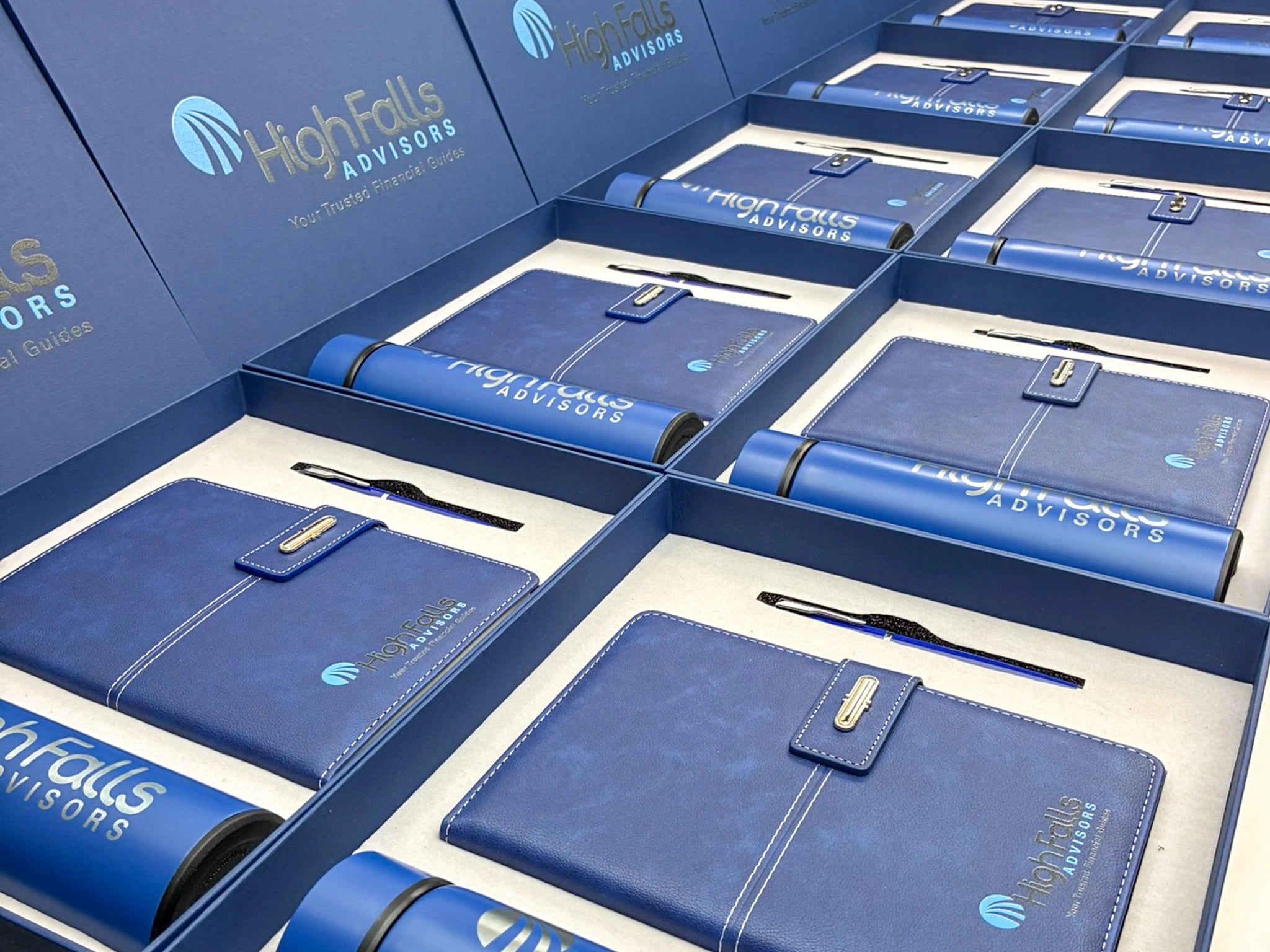
What You’ll Learn in This Corporate Gifting Guide
Understand what corporate gifting is, why it matters for businesses, and how strategic gifting strengthens relationships with clients, employees, and partners throughout the year.
Learn how much companies typically spend on corporate gifts, how to segment recipients, and how to measure return on investment through renewals, referrals, and engagement.
Discover when to include your company logo, how to personalize gifts at scale, and how to ensure your branding enhances the experience rather than feeling promotional.
Explore the differences between employee gifts and client appreciation gifts, and see what types of corporate gift ideas create the most lasting impact.
Learn how to send corporate gifts to multiple addresses efficiently, manage bulk campaigns, and choose a gifting partner that can scale with your business.
Understand the tax considerations, policy concerns, and common corporate gifting mistakes that can undermine even well-intentioned programs.
Stay ahead of the curve with current trends in corporate gifting, including personalization, sustainability, hybrid workplace gifting, and choice-based programs.

Corporate Gifting Strategy: What It Is and Why It Matters
Corporate gifting is not simply sending a box. It’s a relationship-building tool, and when executed well, it can drive greater retention, trust, and meaningful relationships with customers, employees, and partners.
At its heart, corporate gifting solves a basic human need:
“Do they value me?”
This section will briefly highlight what corporate gifting is, the difference between the corporate gifting and promotional items, and the direct correlation that exists between corporate gifting and customer growth.
Ready to turn strategy into a concrete plan? Use our free Corporate Holiday Gifting Planner to map out your goals, budget, recipients, timeline, and gifts step by step.
A good gift can show gratitude in ways that digital communication cannot. It is an unanticipated, personal, memorable, and noticeable moment.
In business, those moments matter. Thoughtful gifting can benefit companies in many ways. It:
- Builds long-term relationships
- Improves loyalty and retention
- Improves the trust of clients and partners
- Improves employee morale and engagement
- Builds positive associations with your brand
Gifts are more than objects; they help in building relationships.
Corporate Gifts vs Promotional Items: What’s the Difference?
One of the biggest mistakes companies make is confusing corporate gifting with promotion.
A corporate gift should feel:
● Premium
● Personal
● Selected with intention
A promotional item is inexpensive, mass-produced, and logo-heavy, meant to market the brand rather than celebrate the recipient. If it looks like it was given away at a trade show, it wasn’t a corporate gift.
For Example:
A cheap plastic water bottle costing $5 decorated with a large logo is mainly geared towards marketing, whereas a nicely designed insulated tumbler with a small logo on it feels much more appreciative. It is not how much the gift costs, but the purpose that matters.
How gifting impacts loyalty and retention
People remain loyal to brands that make them feel valued. A well-timed gift can help build that loyalty.
Proper corporate gifting strengthens:
● Renewal likelihood
● Willingness to refer
● Emotional connection
● Brand perception
Mini-story:
One of our clients shared a story about their gift recipient reaching out to them after they sent a gift celebrating their 5th year in business, saying, “Your milestone congratulations gift reminded us why we love working with you.”
The gift cost them $75.
The renewed contract was $50,000.
That is the power of appreciation.
Why appreciation is a competitive advantage
Most businesses do not express gratitude consistently. When you do, you stand out immediately.
A thoughtful gift says:
- “We notice you.”
- “We appreciate you.”
- “You matter to us.”
Appreciation builds relationship equity, a cushion that helps sustain partnerships through challenges and strengthens them over time.

What types of corporate gifts make the biggest impact?
The most memorable and impactful corporate gifts share a common trait: they are carefully considered; unlike generic and mass produced gifts, the
best corporate gifts are high-quality and useful. When choosing to give a gift to clients, associates, or co-workers, the best corporate gifts are useful and create an emotional bond between the client and company. While a wonderful gift doesn't have to cost a lot of money, it does need to be something that they like.
Some categories of gifts are more effective than others in terms of leaving a lasting impression, regardless of the industry. This is because they are popular with a broad spectrum of people, are appropriate for a professional setting, and are perceived to have a high value.
Categories that consistently make an impact
Premium tech accessories
Tech gifts are effective corporate gifts since they are something that everyone uses every day. For example, a gift like a charger, phone stand, earbuds, or a pouch is useful. The gift is even more effective if it has a small logo, since the recipient gets to see it every time they use it, reminding them of your brand's thoughtfulness.
Wellness and self-care gifts
Reducing stress and improving wellness has become a major concern in the modern workplace environment. Stress relievers such as aromatherapy oil, candles, spa treatments, and blankets are provided by many organizations to enable employees to take a break from their hectic schedules and reduce their stress levels. Employees who work in a busy environment can relax with these types of gifts.
Luxury or artisan treats
Gourmet treats like chocolates, coffees, and snacks are usually effective, especially during holidays.
Travel-friendly accessories
Travel accessories, luggage tags, AirTags, cable organizers, and travel wallets are good gift ideas, especially for teams and clients who have to travel frequently.
Minimal, premium branded items
By utilizing small logos on things like notebooks, tumblers, and pens/leather items, you can enhance your image professionally.
Why packaging matters more than most people realize
A professionally packaged item creates an illusion of being worth much more than it actually costs. This means when purchasing a $40 item that has been packaged well, you will perceive that the item is much more valuable than you would compared a $100 item that was not. Unboxing is part of the experience. Tissue paper, crinkle paper, cards, and presentation are all a major part of this.
For Example:
One of our clients once upgraded from simple cardboard boxes to branded magnetic closure packaging. The gift itself was unchanged, yet the recipient
received an instant boost to their opening experience.
The moral of the story: the way things are presented makes a big difference.
What are the most common corporate gifting mistakes to avoid?
Even the best planned gift initiatives can fail if a few typical mistakes are not avoided. Corporate gifting is as much about what not to do as it is about
choosing the right items. Giving an inappropriate gift can result in an impersonal, puzzling or even offensive message, and so the relationship that one intended to strengthen is likely to be damaged in the end.
To ensure your efforts truly build loyalty rather than weaken it, review our deep dive guide on how to avoid the most common corporate gifting mistakes before launching your next campaign.
These are the major mistakes that companies make and the ways in which they can be avoided.
Mistake 1: Choosing generic or cheap gifts
A low-quality gift is like telling the other person:
"We just gave you a gift because we had to, not because we wanted to."
If the budget is limited, it is wiser to buy fewer but better quality items than a box full of cheap items. The recipients can tell right away if the gift has been given thoughtfully or not.
Example:
After swapping an inexpensive pen and notepad set, a company decided to give only one, very beautiful, personalized notebook. Their feedback was positive and it was evident to them that quality is more important than quantity.
Mistake 2: Over-branding the gift
Gift items that sport big logos or that look like typical promotional giveaways hardly ever manage to convey a genuine gratitude. They are often perceived as a mere marketing trick and the gift is more likely to be ignored or discarded.
When branding feels important, limit the branding to either subtle signs or the packaging only.
Mistake 3: Ignoring cultural, dietary, or
personal sensitivities
Food gifts can be tricky. Alcohol, meats, nuts, or items tied to specific holidays may create exclusion. When gifting to diverse groups:
●Avoid alcohol unless you know it’s appropriate
●Choose universally safe foods when sending food
●Consider wellness, tech, or travel gifts instead
Mistake 4: Sending gifts too late or at the wrong time
The right timing matters. Holiday gifts sent in January will definitely be appear to be on the "thoughtless" list. One way or the other, a birthday gift that comes late by one week will leave the same impression. In case you are tied up with the holiday rush, go ahead and change the theme, choosing something related to the New Year instead. This is fresh, memorable, and thoughtful.
Mistake 5: Neglecting remote/hybrid workers
A lot of organizations unintentionally end up forgetting about remote workers, especially when handing out gifts to employees in the office. Such a situation is probably one of the greatest ways to create a sense of alienation and inequality among coworkers. Using a gifting partner that handles individual shipping helps prevent oversight.
Mistake 6: Treating everyone the same when you shouldn’t
Some gifting moments require segmentation. VIP clients, top performers, or long-standing partners may warrant elevated experiences. You don’t need to spend a lot, instead look intentional.

Corporate Gifting Budget & ROI Guidelines
The idea is that corporate gifting is not an expense, but rather an investment. It’s not about how much you are willing to spend, but rather how you can use your gifting budget to match the value of your relationship and the business outcome you are trying to influence.
This section of corporate gifting will discuss how it can drive business outcomes like renewal, referral, deal acceleration, and employee engagement, along with budget ranges, segmentation of your audience, and measuring the ROI of your strategy.
How much should you spend on corporate gifts?
Understanding how to budget for corporate gifting
Most companies struggle with the question of “How much should we spend?” because corporate gifting doesn’t have universal rules. Budgets vary by:
- Industry
- Relationship value
- Company size
- Gifting goals
- The number of recipients
- Level of personalization
Yet though the actual figure may fluctuate, the method of selecting a budget is consistent across all industries:. Your gifting budget is based on the value of the relationship, not on the cost of the gift. A $100 gift may be well worth it if it strengthens a six-figure relationship.
Typical corporate gifting budget ranges
Across thousands of gifting campaigns, these are the most common per-recipient spend ranges:
Standard client gifts:
$50–$150: This is the typical budget for holiday, onboarding, and appreciation gifts.
VIP and high-value client gifts:
$150–$500+: This category is usually reserved for major accounts, contract renewals, or milestone celebrations.
Employee gifts:
$25–$150: This category varies depending on company culture and specific occasions.
Event or conference gifts:
$20–$75: Event or conference gifts focus on portability and practicality.
Prospect or lead-nurturing gifts:
$20–$50: You can still give meaningful gifts on a tight budget.
A simple formula for choosing a gifting budget
If you're unsure where to land, use this simple calculation:
Cost of Gift = 0.5%–2% of Annual Relationship Value
Examples:
- A client worth $25,000/year → gift budget: $125–$500
- A $200,000 partnership → $1,000–$4,000 across multiple touchpoints
- A $2,000 project → $20–$80 is appropriate
This formula keeps gifting proportional and strategic.
Budgeting for one-to-many gifting
When it comes to bulk gifting, cost has to be considered. To get started, here are a few ideas:
- Sticking to consistent price bands
- Using custom corporate gifts that are perceived to be of high value without incurring significant costs
- Focusing on personalization where it makes a significant difference
Example:
A company of 1,500 employees might decide to give a custom gift valued at $50, with a personal note. The experience is of high value despite being scalable.

What most companies actually spend
Companies often underestimate how much their peers invest.
Across industries, typical budgets look like:
- Tech, consulting, finance: $75–$200+ per client
- Real estate, mortgage, insurance: $50–$150
- Healthcare, education, nonprofits: $25–$75
- HR and employee experience teams: $50–$125 per employee
The nationwide corporate gifting average sits around $75–$125.
Remember: You don’t need to mirror your industry; you need to reflect your brand and relationships.
Balancing cost and perceived value
The price of the gift is less important than how it feels.
Perceived value is influenced by:
- Packaging quality
- Personalization
- Presentation
- The story behind the item
- Brand alignment
- Your message inside
- Timing
A beautifully packaged $50 gift often feels more premium than a $150 gift in plain packaging.
Presentation elevates value and can be as important as the gift contents.
Examples of budgets done well (and poorly)
A well-budgeted gift
A marketing agency spends about $60 per client on a custom gift box filled with artisan snacks, a branded notebook, and a thoughtful note. Clients mention the gift months later. Several referrals follow.
A poorly budgeted gift
A financial firm sends a $15 plastic tumbler with a giant logo. Clients feel underappreciated. Some silently start to calculate how much they spend with the financial firm.
The price difference? About $45.
The brand impact? Massive.
Budgeting for personalization
You don’t need to personalize every item to create meaning.
High-impact personalization includes:
- Including the recipient’s name
- Handwritten notes
- Custom-printed cards
- Engraved items
- Packaging inserts tied to the occasion
If the budget is limited, personalize the card, not the gift item.
Avoiding common budgeting mistakes
Overspending without strategy
Going “big” doesn’t always create a stronger impact. Thoughtfulness is more important than cost.
Underspending on key relationships
If a client is worth six figures, a $25 branded item sends the wrong message.
Ignoring packaging costs
Packaging communicates value. Don't skimp.
Forgetting shipping when budgeting
Shipping can add 15–35% depending on timing and location.
How to stretch your gifting budget further
- Choose multi-item sets where perceived value is higher
- Use custom packaging to elevate inexpensive items
- Bundle small items into themed experiences
- Use “Let Them Choose” gifting tools for large groups
- Focus on the message instead of the product
A gift doesn’t need to be expensive. It needs to feel intentional.
How do you measure the ROI of corporate gifting?
Why ROI in Corporate Gifting Is Hard to Measure
In contrast to typical marketing channels, the return on investment for corporate gifting is not necessarily linear. Gifts can impact relationships, loyalty, retention, referrals, and perception; these influences are all very strong, but cannot be accurately quantified. However, when measuring corporate gifting ROI, establishing the proper framework will help to provide meaningful and data-supported numbers.
Start With a Clear Objective
Define What You Want the Gift to Achieve
The definition of ROI is quite different depending on your goals. Some goals include:
- Client retention
- Creating new business
- Driving deal velocity
- Employee engagement
- Event participation
Without a goal in mind, everything you measure will be vague or inconclusive.
Align Your KPI With the Goal
For each objective, tie it to a measurable KPI:
- Retention: renewal rate increases
- Sales: number of meetings booked after gifting campaigns
- Engagement: portal click-through or redemption rates
- Employee: satisfaction or recognition scores
Track Engagement Metrics First
Delivery + Opening Behavior
Monitor delivery confirmations, QR code scans, and landing page visits if using digital or hybrid gifting. These early engagement markers help you see whether the gift is getting attention.
Thank-You Responses
Replies (emails, calls, or even LinkedIn messages) indicate stronger-than-average engagement and show relational momentum.
Measure Business Outcomes That Follow
Revenue Influence
Look for correlations between the gifting initiative and deal progression, upsells, new opportunities, or reactivated accounts. Even partial attribution helps quantify ROI.
Retention + Loyalty
Measure churn reduction, contract extensions, or increased order frequency after gifting campaigns, especially in account management or customer success contexts.
Referral Generation
High-value corporate gifts often spark referral conversations. Track any introductions, warm leads, or partner opportunities that follow.
Use a Gifting Partner With Analytics
Platforms that integrate gifting with CRM data, or offer redemption tracking (such as “Let Them Choose” portals), make ROI measurement dramatically easier. They bridge the gap between gifting and actual business outcomes, delivering the data companies wish they had years ago.
Learn more at our gifting blog.

Branded Corporate Gifts & Personalization
Branding can either enhance or take attention away from a gift. It all depends on how it’s approached. When branding feels subtle, premium, and thoughtful, it can actually support partnership and professionalism. When it feels oversized, promotional, and cost-driven, it can turn an expression of appreciation into an expression of advertising. Personalization also works in the same way. It all depends on how it’s approached. When personalization feels thoughtful and relevant, it can actually increase the value and appreciation of a gift. When it feels generic, impersonal, and mass-produced, it can detract from an expression of appreciation and turn it into an expression of advertising. In the following section, we’ll look at how branding can actually support and enhance a gift, how personalization can actually support and enhance a gift, and how we can balance these two concepts.
Should your corporate gift be branded by your company?
Branding can either enhance your corporate gift or completely undermine it. The key is subtlety. The more your gift is seen as a celebration of the recipient, as opposed to a celebration of your company, the more it will be appreciated. Branding is best achieved if it is tasteful, high quality, and well-integrated. However, if your branding is too prominent or your gift is too cheap, your gift quickly changes from “thoughtful” to “promotional,” not exactly what you want.
When branding adds value to the gift
Branding can be a powerful tool when done thoughtfully. A discreet logo on a high-end product can imply partnership and quality without over-accessorizing the product. Branding is effective when:
- The product is high quality and built to last
- The branding is discreet, tone on tone, or engraved
- The product fits your brand’s visual identity
- The branding elevates the sophistication of the product
- The product is something people would normally use in a professional setting
Examples:
- A debossed leather notebook
- A simple backpack with a stitched logo
- A stainless steel tumbler with a laser-engraved logo
- A high-end tech accessory with a discreet logo
The products should appear to be something a person might normally buy for themselves.
When to avoid branding altogether
Branding can be a problem if:
- The gift is cheap or generic
- The logo is large or flashy
- The item is personal (e.g., clothing, home décor, self-care products)
- The gift is edible
- The audience is large or diverse
If you would not want another person’s logo on an item like this, do not put your own logo on it.
Quick test:
Will the person use a branded item like this at work or at home?
If not, skip the branding.
Branding the packaging instead of the gift
One of the best ways to strike a balance is to brand the packaging, not necessarily the product.
Consider branding:
- The gift box
- The card insert
- The tissue or crinkle paper
- A belly band or sleeve
- A wax seal
- A custom sticker
This approach keeps the gift itself clean and usable, while still reinforcing your brand identity.
Example:
A company sent premium throw blankets with no logo, but the packaging included beautifully branded boxes and custom cards. Recipients loved the blankets, and the company still received brand recognition during the unboxing experience.

How do you make a corporate gift feel personal and thoughtful?
A corporate gift can be remembered if it is chosen for the person, rather than taken from a generic catalog. It does not cost a lot to be thoughtful; you just need the right intention. The most memorable gifts are those that say, “We know and appreciate you.”
Even small things can turn a corporate gift into an experience your recipients will remember.
Use personalization strategically
Personalization moves the user right into their emotional state. Adding a person's name, initials, or role makes simple items memorable. Examples of popular ways to personalize:
- Adding a monogram on notebooks, luggage tags, or drinkware
- Engraving on a tumbler, tool, or desk item
- Adding a name to a card, tag, or box
- Including a personalized message with a reference to their team, job, or milestone
Example:
A company once sent onboarding kits featuring notebooks debossed with each new employee’s initials. Employees frequently posted pictures of them on social media, not because the notebook was expensive, but because it was personalized.
Write a meaningful message
A meaningful message is the most remembered thing about the gift.
A good message is:
- Simple
- Authentic
- Specific
- Human
Don’t use corporate terms such as “We appreciate your business.”
Rather, use:
- “Thank you for your partnership this year. We truly enjoy working with you.”
- “Your efforts have made a difference in our team. Thank you.”
- "We are thankful for the trust you have shown and look forward to
what’s next.”
A gift that has no message is nothing but a box of objects.
A gift with a message is an experience they'll remember.
Enhance the experience through packaging
Presentation communicates care. Beautiful packaging increases perceived value and sets expectations before the gift is even opened.
Ways to elevate presentation:
- Branded or themed gift boxes
- Custom tissue, crinkle paper, or sleeves
- Elegant cards or envelopes
- Color palettes aligned with your brand or occasion
- QR codes linking to welcome videos or thank-you messages
Mini-story:
One of our clients who was sending branded new-hire kits to new employees added two QR codes to their gifts. One led to a message from the Commissioner welcoming them to the team. The second led to a "Share & Tag" page where new employees could share their unboxing experiences and see other new hires doing the same thing. Both were great ideas for building the organization's culture from day one.
Choose items that tell a story
People can connect better with something chosen intentionally, as if it were a story. Including a short card explaining:
- Why an item was chosen
- The artisan who made it
- The theme behind the gift
- A shared milestone
…turns a product assortment into a curated experience.
Should you send the same gift to everyone or customize it by recipient?
Your choice, whether it is the same gift for everyone or different ones for each group, will likely depend on the audience, goals, and budget. Many of the best gifting programs are hybrids, a standard approach combined with smart customer segmentation. This strategy is effective in both cases if you do it thoughtfully.
The key is finding a balance.
When sending the same gift to everyone works best
Uniform gifting is ideal when you want:
- A consistent brand experience
- Streamlined ordering and shipping
- Clear budget predictability
- Faster approvals
- Fewer decisions and logistics
This approach is especially useful for:
- Holiday gifting
- Company-wide appreciation gifts
- Conference or event swag
- New employee onboarding kits
Even a single gift may be perceived as personal if the packaging and the gift itself are of good quality. In addition, consistency may also eliminate the perception of favoritism or inequality in the treatment of employees.
Real Example:
One of our financial services clients sends every employee the same premium wellness-themed gift each year, but personalizes each card. The experience feels unified while still human.
When customizing by group creates more impact
Audience segmentation is powerful when your recipients have different roles, expectations, or value to the business.
Customization works well for:
- VIP clients vs. general clients
- Sales teams vs. operations teams
- Long-term partners vs. new relationships
- High-level executives vs. larger employee groups
- Regional offices with cultural differences
You don’t need fully unique gifts, just thoughtful differentiation.
Segmentation can include:
- Different gift tiers
- Swapping one item in a gift set
- Role-specific personalization
- Themed gifts based on relationship milestones
Example:
One of our wealth management clients segments their holiday gifts by the size of the client's portfolio. The three tiers of gifts build on each other, with additional items added to tiers two and three. All packaging was the same style, giving the program a unified look.
Hybrid gifting: the best of both worlds
The most effective programs combine consistency with personalization. A hybrid approach might include:
- One core gift, plus add-ons based on tier
- A standard box with personalized cards
- A “Let Them Choose” portal with multiple curated options
- One theme with different items tailored to different groups
This way, you are able to scale efficiently and show your recipients that you chose the gifts with care and intention.
Personalize the Message
A handwritten note or card can turn even a very simple gift into a really personal one. Studies show that people remember the message more than the present.
What should you write in a corporate gift message?

Why Your Message Matters More Than the Gift
Even the most impressive gift may not have a large impact without an effective message. A message adds value and depth to the gift. It emphasizes your brand voice, purpose, and personality. What makes an excellent message is that it is brief, cordial, and suitable for the occasion. You may be writing a thank-you note, welcoming a new employee, or commemorating an achievement.
Keep It Professional but Personal
Recognize the Professional Relationship
Reference the partnership, project, or objective you are developing together. Even a short mention conveys that you wrote this message with intention.
For example: “Thank you for working with us on campaigns this year.”
Do Not Use Overly-Familiar Terms
If you haven't yet built a really close relationship with the person, then it's better to keep your message friendly but at the same time businesslike. So, do not assume anything about their family life, personal beliefs, or any of their private affairs.
Match the Message to the Occasion
Client Thank-You Gifts
Highlight gratitude, partnership, and future hopes.
Example: “We appreciate your continued trust. We look forward to supporting your success in the year ahead.”
Employee Appreciation or Recognition
Highlight contribution, impact, and belonging.
Example: “We appreciate your hard work and dedication. It makes a meaningful difference every day.”
Event or Conference Gifts
Emphasize the experience and generate excitement.
Example: "We are looking forward to seeing you at the event and having a wonderful time!"
Keep It Short, Clear, and Authentic
Brevity Wins
A message doesn’t have to be long to be effective. Three to five well-written sentences are usually ideal.
Avoid Sales Language
A gift message is not the time or place to pitch. Subtlety is more effective than overt sales tactics.
Add Branding Without Making It About You
Include your brand name or logo to add branding to your card while ensuring that the focus of the message is still on them and not you. This creates a professional feeling that makes the message feel more personal and less like a promotional flyer.
When You Can't Think of A Way To Say It, Use a Template
Templates are great for larger scale gifting and can still feel personalized by adding small items like the recipient’s name or the project number to them. If you work with a gifting partner, they should always provide you with messages that adhere to your brand voice.

Best Corporate Gift Ideas for Employees & Clients
The best corporate gifts are those that feel right for the relationship and well-designed. Something that resonates with a loyal client may not be the same as what resonates with an employee who’s reaching a milestone. The best corporate gifts are, first and foremost, very well aligned with the person, and the message you want to convey.
However, the best corporate gifts tend to have a few commonalities: they tend to be of high quality, universal in their appeal, and well-thought-out. Furthermore, these special gifts tend to be associated with significant events such as promotions, anniversaries, completion of projects, hiring of a new employee, and holiday celebrations.
What is best for the employee and/or client, how to choose universal corporate gifts when you are not well-acquainted with the individual, and what to avoid in corporate gifts that represent your company will be discussed in the following section.
What are the best corporate gifts for employees?
The best corporate gifts for employees are those that make the employees feel special and recognized, and are associated with the company without being forced, obligatory, or generic. A well-thought-out corporate gift for the employee is a morale-booster and an influencer of a positive company culture.
The trick is finding gifts that are useful, personal, and reflective of your company’s values. As employees spend so much time within your organization, the gifts they receive have a big influence on how they feel about where they work. The right corporate gift is one that says,
“We appreciate you not just for what you do, but for who you are.”
Categories employees consistently love
Wellness and self-care gifts
Stress management and balancing life and work are top concerns for most employees today . Wellness gifts are appreciated by all and foster good health habits.
Some ideas include:
- Aromatherapy/spa gift sets
- Blankets
- Massage balls or recovery tools
- Desk plants or calming décor
- Sleep or mindfulness sets
These items communicate care beyond the office walls.
Desk and productivity items
Employees love receiving gifts that make their work environment enjoyable and increase productivity.
Great ideas include:
- Premium notebooks or planners
- Desk organizers
- Wireless chargers
- Premium pens
- Ergonomic accessories
Productivity gifts are the ones you use every day.
Experience-based gifts
Experiential gifts are great because they create memories. Employees also have the opportunity to select something they like.
Examples:
- Gift cards for dining, entertainment, or hobbies
- “Let Them Choose” portals
- Virtual classes (cooking, photography, wellness)
These gifts are great for distributed/hybrid teams.
Celebration and milestone gifts
Recognizing personal and professional milestones builds loyalty and emotional connection.
What milestones should you celebrate?
- Work anniversaries
- Promotions
- Birthdays
- Birth of a new baby
- Achievements
- Retirements
A milestone gift usually feels more thoughtful than a holiday gift.
Gifts employees don’t want
Employees typically dislike:
- Cheap branded swag
- T-shirts or apparel that they didn’t choose
- Overly personal items (fragrances, alcohol)
- Desk clutter
A simple rule:
If the item feels like something from a trade show booth, skip it.
What are the best corporate gifts for clients or partners?
Choosing the best corporate gifts for clients and partners is about selecting items that not only build trust but also reinforce the relationship and display your professional expertise. In fact, your corporate gift is more than just a mere item; it is a brand experience. Ultimately, the only thing that a client will hold on to is the way you make them feel, and an excellent corporate gift can pave the way for loyalty that lasts a great deal longer.
In choosing corporate gifts to be presented to the clients, it is important to focus on the quality, relevance, and even the aesthetics of the gift. The objective is to give something unique and functional that they'll actually like, not something general and advertising-oriented.
Categories that consistently resonate with clients
Premium tech accessories
Universal and perceived to be high-value. Tech accessories tend to perform well because they’re used by clients throughout their day. Strong options include:
●Wireless chargers
●Bluetooth trackers
●Desktop tech organizers
●Noise-cancelling earbud sets
●Cable management kits
Tech shows you're modern and is top-of-mind all year, not just during the unboxing.
Luxury or artisan treats
Food gifts remain a favorite because they’re easy to share and feel exciting. Popular choices include:
●Small-batch chocolates
●Craft coffee or tea
●Artisanal snack boxes
●Premium baked goods
These gifts create a positive emotional experience, perfect for occasions such as holidays and client anniversaries.
Tasteful, subtly branded items
Clients respond well to understated branding on thoughtfully chosen items.
Great examples:
- Leather notebooks
- High-end tumblers
- Travel accessories
- Minimalist desk décor
The branding should be subtle enough that recipients are proud to use the item long after the holiday season.
Experience-based gifts for VIP clients
Experiences are sometimes a better option for VIP clients. Options include:
- Curated “Let Them Choose” gift selections
- Tickets to local events
- Tasting kits, whether in-person or not
- Donation in their name
- Subscription-based gifts
These gifts are more easily personalized, especially for VIP clients, as they have different tastes.
What to avoid with client gifting
Clients generally dislike:
- Low-quality swag
- Overly branded items
- Apparel
- Alcohol, unless you know it’s appropriate
- Anything too personal or taste-specific
The rule of thumb:
If you wouldn’t gift it to a respected friend, don’t gift it to a client.
Looking for corporate gifts with no minimum order? Shadow Breeze makes it easy to send premium gifts one at a time or at scale.

How do you handle corporate gifting for people you don’t know well?
Understanding the Challenge of Gifting to People You Don’t Know Well
The tricky part of corporate gifting is when you do not know what the preferences of the person are. What you want to avoid is giving them something too personal. However, you still need to ensure that what you give them still looks thoughtful and appropriate for your brand. In these cases, universally liked, high-quality options tend to be the best.
Choose Universally Appreciated Categories
High-Quality Snacks & Treats
High-quality snack mixes, chocolates, and popcorn are generally popular and do not require many personal assumptions to be chosen. If you are looking to buy something for the whole company, this might be a suitable option.
Useful Office or Tech Accessories
Things like an insulated cup, a wireless charger, a notebook, or an office accessory are usually useful items but not personal items. In addition, if you have a nice design scheme going on, it helps to promote your company brand.
Wellness & Relaxation Gifts
Things like candles, blankets, etc., tend to have a warm tone that doesn’t get too personal. They’re good for well-being without being too personal like skincare or fragrance products.
Rely on Customization Without Being Personal
Branded Packaging
Even if you don’t know the person well, custom packaging, such as your logo, brand colors, or a themed insert card, creates memorability without personal assumptions.
Message Customization
A kind note can make even a neutral gift feel personal. Rely on messages that are relationship-centric (current or future), express gratitude, or recognize their contribution without making claims about yourself.
Consider Let-Them-Choose Options
Self-Selection Portals, like Shadow Breeze’s Breezy Gifting - Let Them Choose, are great for unknown or many recipients. They eliminate all risk because recipients can select what they really want from curated lists. This is especially helpful when recipients have unknown preferences, dietary needs, or are in different countries.
Avoid Overly Specific Gifts
Items Requiring Personal Knowledge
Skip gifts that require assumptions about hobbies, alcohol use, dietary habits, or home life. This protects you from unintentionally sending something inappropriate or unusable.
Should you send alcohol as a corporate gift?
Alcohol is one of the most controversial categories in corporate gifting. While wine, champagne, or other alcoholic drinks may be associated with luxury and celebrations, alcohol is the most risky option in comparison with any other gift option. While alcohol can be a good option in some cases, in other cases, alcohol may not be a good option or may be sensitive for some people or culture. Therefore, alcohol presents are to be given carefully. You need to weigh who your audience is, how close you are with the person to whom you are gifting, or the situation in which you are offering alcohol.
Pro Tip: Recent studies show that 35 to 45% of the adult population in the US are abstainers of alcohol.
When alcohol can be an appropriate gift
In certain cases, alcohol can be an appropriate gift, especially if you have a good relationship with the person you are gifting or if you are gifting to a small, known client group. Alcohol can also be an appropriate gift in the following situations:
● Celebratory occasions
● Executive-level gifting
● Gifting to industries where alcohol consumption is more accepted or encouraged
● Gifting to small client groups or known individuals
● Gifting in the context of holidays or celebratory events
Premium, beautifully packaged bottles often make a strong impression. But only when you’re confident the recipient welcomes it.
Example: A long-standing partner who collects wine or regularly hosts business events may truly appreciate a curated bottle paired with elegant packaging.
When to avoid sending alcohol
Alcohol becomes problematic when gifting to:
- Large, diverse groups
- People you don’t know well
- Recipients with undetermined dietary, cultural, or religious restrictions
- Organizations with rigid compliance policies in place
- Employees, especially in high volume
- Healthcare, education, or government environments
Alcohol in these cases could be perceived as tone-deaf, even if the gesture was intended as positive.
Legal and logistical considerations
Alcohol gifting requires additional steps, such as:
- Age verification
- Restricted shipping states
- Delivery signatures
- Higher shipping costs
- Longer timelines
- Special packaging to prevent breakage
These requirements make alcohol less practical than other gift categories.
Safer alternatives that still feel celebratory
If you want the same feeling as a celebratory gift but without the risk involved, then the following ideas may interest you:
- Gourmet chocolates
- Sparkling non-alcoholic drinks
- Artisan treats
- Luxury coffees and teas
- Cocktail kits without alcohol
These items offer the same celebratory feel but without the risk involved of choosing alcohol.

What corporate gifts should you avoid sending?
Why Certain Corporate Gifts Can Backfire
Of course, gifts can bring people closer, but a wrong gift may not only make you drift further, but also may damage your brand. Some gifts are simply too personal, some promotional, and some just not suitable at all for the work environment. By avoiding these typical errors, you may have your gift go a long way in developing trust and professionalism.
Avoid Anything Too Personal
Personal Care Products
Lotions, perfumes, skin care products, and beauty products may cause allergic reactions or be perceived as too personal. The recipient may think that the gift implies something negative about them.
Clothing
Sizing is tricky, and style preferences vary widely. Unless it’s a simple branded T-shirt for an internal event, clothing often misses the mark.
Skip Gifts That Make Assumptions
Alcohol
Alcohol is also commonly used as a corporate gift, and it also carries its own set of risks. The person receiving it may not drink for personal reasons, such as health, religious, or rehabilitation issues. However, if you still want to go for alcohol as a corporate gift, it is important that it is suitable for your audience.
Food With Dietary Restrictions
Certain foods, especially very specific items such as pork products, baked goods, or cultural-specific items, may be problematic. Safer options may include a collection of snack foods that are well-curated and have ingredient labels.
Watch Out for Overly Promotional Items
Cheap Swag
Cheap promotional products such as keychains and stress balls, low-quality pens, all come across as impersonal and can even undermine your brand.
Gifts That Feel Like Advertising
When the advertising becomes more important than the gift, it looks like the gesture was done for selfish reasons, rather than sincere ones. The way to go, of course, is tasteful branding.
Avoid Complicated or High-Maintenance Items
Gifts Requiring Assembly
When a gift requires tools, batteries, or a user's manual, enthusiasm for the gift disappears very fast. Corporate gifting should be low-maintenance for the recipient.
Items That Are Hard to Use or Store
Bulky décor, large wall art, or niche gadgets often feel like clutter rather than a valuable item.
Choose Safe, Universal Alternatives Instead
High-quality snacks, tech accessories, self-care items (like blankets or candles), branded drinkware, and “let-them-choose” gift portals are universally well-received. They avoid personal assumptions while still showing an interest in the recipient.

Corporate Gifting Logistics & Timing
A well-thought-out corporate gift may not have the desired effect if the logistics and timing are not appropriate. The timing and coordination of the corporate gift's shipping schedule are as important as the corporate gift itself. A wrong timing or a wrong coordination of shipping times may spoil the desired effect that you are looking to create.
When it comes to corporate gifting, timing and planning are everything. For instance, if you are looking to roll out corporate gifts during the holiday season, then it is very important that you start early. In this section, we will discuss how you should plan your corporate gifting roll-out and how you can do it efficiently without any complexities.
If you’re planning a year‑end or holiday campaign, the Corporate Holiday Gifting Planner includes a logistics checklist and downloadable trackers to keep recipients, shipments, and timelines organized.
When are the right occasions for corporate gifting?
While the holiday gifting season is the most popular season to do corporate gifting, some of the most impactful corporate gifting instances fall during unexpected but significant times of the year. The best corporate gifting strategy is to balance the corporate gifting instances throughout the year. The ideal corporate gifting moments are the occasions when corporate gifting aligns with appreciation, partnership, and/or celebration.
If you want a deeper breakdown on when to send corporate gifts, read our full guide on The Best Corporate Gifting Occasions for Employees and Clients.
Common business gifting moments
Holiday gifting
The holidays remain the busiest corporate gifting season. Gifts at this time feel festive, inclusive, and celebratory.
Pro tip: Send early, or shift to a New Year theme to help your gift stand out from the December rush.
Client or partnership anniversaries
Celebrating the anniversary of a partnership conveys a powerful message: “We value this relationship year after year.” Even a small gift for the 1-year or 5-year anniversary of a partnership can make an client feel special.
Employee milestones
The anniversaries, promotions, and achievements of the team are the best times to celebrate the efforts of your employees.
New client onboarding
This is one of the most impactful gifting opportunities. A welcome gift sets the tone and creates early trust with the client.
Project completion or product launch
Completing a project or launching a product is definitely something to celebrate. A small token of appreciation is always welcome.
Referral thank-yous
Referrals are the lifeblood of many businesses. A good thank-you gift encourages the referrer to keep referring.
Strategic gifting vs. seasonal gifting
Seasonal gifting is expected. Strategic gifting is more memorable.
Strategic gifts are tied to real business moments, such as:
- A client achieving a milestone
- Completing a challenging quarter
- Overcoming a challenging project
- Renewing a contract
- Warming up a relationship
Strategic gifting surprises the client and can have more emotional impact because it is perceived as personal and timely.
Case Study:
After launching a product, the client team was sent a small appreciation gift with the note:
“Thank you for the late nights and incredible partnership.”
Months later, the client was still talking about it.
How often should a business send gifts?
A business might consider sending gifts:
- To clients: 1–3 times per year
- To employees: 2–4 times per year
- To partners/VIPs: As needed, based on milestones or collaboration
More is not better. Meaningful is better.
One well-timed gift can be more impactful than several forgettable gifts.

How far in advance should you plan corporate gifting?
The timing of corporate gifting is more critical than most businesses think. The sooner you start planning, the better your prices, availability, customization, and most importantly, delivery will be. If you are planning to run a holiday gifting campaign, a new employee onboarding program, or a major client appreciation event, you will probably get the best result by starting quite early.
A simple rule of thumb:
The more customized and large your gifting needs are, the sooner you should start planning.
Typical planning timelines by type of gift
Holiday gifting (the busiest season of the year)
Start 8-12 weeks prior to the holiday season. For large orders over 200 gifts, start 12-16 weeks prior.
Why?
●Customized items need time to produce
●Inventory sells out quickly
●Shipping infrastructure is slower during the month of December
●Packaging may require longer setup times
Companies that wait until late November often face higher shipping costs, reduced options, or delayed delivery.
Client or employee milestones
4 to 6 weeks is the best time frame, especially if it involves personalization. If it is not personalized, 2 to 3 weeks might be sufficient. Milestones should be well-timed. It is better to be early rather than late.
Bulk or multi-address shipments
50+ people: plan 4 to 8 weeks ahead.
250+ people: plan 8 to 12 weeks ahead.
Multi-address shipping is logistically complex. Gathering addresses, verifying them, printing labels, and coordinating delivery takes more time than most companies expect.
Event or conference gifting
6–10 weeks before the event is typical.
Events often require:
- Pre-event shipping
- Branded boxes or kits
- Onsite delivery coordination
- Travel-friendly items
- Inventory forecasting
Waiting too long can limit the types of gifts you’re able to source.
Why early planning saves money (and stress)
Planning early helps you:
- Avoid rush production fees
- Access more premium options
- Reduce expedited shipping costs
- Ensure quality control
- Build in time for revisions or approvals
- Reduce the risk of out-of-stock items
Gifting that is rushed almost always ends up more expensive and less impactful.
Last-minute gifting is still possible, but limited
If you're in a bind, many gifting providers (including Shadow Breeze) can still deliver great options quickly. However, you’ll be limited to:
- Ready-to-ship gifts
- Neutral packaging
- Unbranded items
- No personalization
Speed often comes at the expense of customization at large scales.

How do you send gifts to multiple addresses efficiently?
Why Multi-Address Gifting Is So Challenging
If you plan to send gift items to a significant number of locations (whether it's ten or ten thousand), this planning and execution process is complicated. This is primarily due to the number of aspects that have to be considered for each location. Companies are surprised at how many variables are involved with locating address information; determining what item to ship; deciding when to ship each item; and managing the processes related to getting each of the items to their destination(s) all of which result in either many spreadsheets or too many labels or e-mails.
Centralize Your Data Before You Send
Collect Addresses in a Standardized Format
Use a single, clean template for address submissions. This reduces errors, speeds up processing, and ensures on-time arrival. Even one missing apartment number or incorrect ZIP code can trigger costly delays.
Validate Addresses Before Shipping
Address validation tools (or gifting partners that do this for you) prevent returns, missed deliveries, and wasted budget. When you’re shipping at a large scale, every cent saved matters.
Use a Vendor With Built-In Multi-Address Tools
Bulk Uploads
A gifting provider with a bulk CSV upload tool lets you drop hundreds of addresses into a system at once, avoiding manual entry and eliminating errors.
Automated Order Splitting
Instead of placing one order at a time, your vendor should automatically split a single spreadsheet into individual shipments, handling all the logistics behind the scenes.
Real-Time Tracking
Look for gifting partners with gifting portals to track your gifts, including dashboards to view what’s been sent, what’s been delivered, and what’s still in transit. This is particularly useful for executive assistants, HR teams, and marketers.
Consider a Gift Portal for Employee or Client Selection
Self-Service Options Reduce Mistakes
If different recipients are choosing different gifts, a “pick your own gift” portal eliminates the need to manage multiple SKUs, preferences, or inventory manually.
No More Collecting Addresses
Tools like the Breezy Gifting Let Them Choose portal allow recipients to enter their own address, ensuring accuracy and drastically reducing administrative labor.
Work With a Partner Who Manages Everything
Outsourcing logistics is the most effective way to enhance your gifting capabilities when dealing with multiple addresses. Using a third-party vendor that manages fulfillment, packaging, coordinating carriers, providing tracking information, and customer service takes the logistics burden off your team so that they can concentrate on strategy rather than shipping.

How do you choose the right corporate gifting vendor?
Why the Right Vendor Matters More Than Ever
Corporate gifting is no longer just about holiday gifts but about relationship building. With increasing standards, the partner you choose will have a direct influence on your reputation, productivity, and ROI. A good partner will make corporate gifting a seamless process for you so that your team can focus on other important work.
Look for True End-to-End Service - Not Just Gifts but a Full Gifting Infrastructure
The best vendors provide much more than products. They offer design support, fulfillment, branded packaging, multi-address shipping, message customization, portal creation, and real-time tracking. Shadow Breeze specializes in this comprehensive approach, acting as an extension of your team rather than a simple retailer.
Robust Logistics and Multi-Address Capabilities
If you’re sending gifts to dozens, hundreds, or thousands of people, your vendor must have the operational infrastructure to handle scale without errors. Shadow Breeze’s fulfillment system is designed for multi-address campaigns, bulk uploads, and complex corporate programs.
Prioritize Customization and Brand Alignment
On-Demand Branding
The personalization aspect is a necessity in today’s corporate gifting world. Seek a vendor that can offer personalization of gifts by adding your brand’s logo and color schemes. Shadow Breeze provides on-demand branded gifts with no minimum quantity requirements.
Custom Gift Design
For events, product launches, executive outreach, or large programs, you should have access to creative support. Shadow Breeze’s design team collaborates with clients to build unique gift concepts aligned with brand identity and campaign goals.
Evaluate Technology and Ease of Use
Online Tools That Reduce Work
Choose a gifting partner with intuitive tools that simplify the process. Shadow Breeze offers the Breezy Gifting Let Them Choose platform, letting recipients select their own gift while capturing their shipping address automatically. On your end, there are no spreadsheets, no chasing people down.
Transparent Tracking
Your vendor should provide order visibility from start to finish. Shadow Breeze offers detailed tracking and dedicated account support to ensure each shipment arrives on time.
Free Shipping
Get more out of your gifting budget when you ship your gifts for free. Orders over $100 (per shipping address) ship for free with Shadow Breeze.
Choose a Vendor Who Acts Like a Partner
Great gifting isn’t transactional. Look for a vendor who understands your business, recommends creative solutions, and proactively prevents problems. With personalized service, strong operational capabilities, and unmatched customization, Shadow Breeze delivers a seamless, professional experience that elevates any corporate gifting program.

Corporate Gifting Compliance & Risk
Gift-giving is an important act for strengthening relationships but must be carried out in a manner that is consistent with legal requirements and industry standards and practices. Tax laws and restrictions on value and category of gifts may vary and must not be overlooked.
With clear internal guidelines and a trusted gifting partner, compliance becomes straightforward. Below, we review key considerations to help ensure your gifting strategy remains both impactful and responsible.
What are the tax rules around corporate gifting?
Corporate gifting becomes more complex when tax rules enter the picture. While gifting is a powerful relationship-building tool, businesses often misunderstand how the IRS treats gifts.
The IRS allows businesses to deduct up to $25 per recipient per year for business gifts. This surprises many companies, especially those that invest heavily in gifting.
A few important clarifications:
- The $25 limit is not a cap on how much you can spend, but a deduction limit.
You may still spend $50, $100, or $500 on a gift; you can simply deduct only $25 of the amount. The limit applies per recipient, not per gift. Couples count as one recipient unless they both independently qualify (e.g., both are clients).
This rule applies to physical gifts but not necessarily to items like:
- Branded promotional items
- Team events or meals
- Certain awards
- Marketing materials
These categories may fall under different deduction guidelines.
When employee gifts are taxable
Employee gifting follows different tax rules than client gifting.
In general:
- Cash and gift cards are always taxable as income, regardless of amount.
Non-cash gifts may be considered de minimis (non-taxable) if they are low-value and given infrequently. Holiday gifts like hams, chocolates, or small swag typically fall under de minimis rules. More expensive gifts may need to be reported as taxable income.
Example:
A $15 company-branded mug is non-taxable.
A $300 pair of headphones given as a holiday bonus is taxable, unless classified under a specific award program.
Special rules for awards, prizes, and events
Certain gifts may qualify as employee achievement awards, which have more favorable tax treatment if:
- They recognize length of service
- They are given as part of a meaningful ceremony
- They meet IRS-defined criteria
Meanwhile, gifts like event tickets, travel, or entertainment experiences may fall under separate entertainment rules.
When to consult a tax professional
Because rules differ for employees vs. clients and because gifting overlaps with marketing, recognition, and compensation strategies, it’s wise to verify your approach with an accountant.
A quick consultation can help you:
- Categorize gifts correctly
- Avoid taxable surprises
- Maximize allowable deductions
- Stay compliant across different gift types
Industry Specific Regulations
Some businesses also have more stringent guidelines with regard to corporate gifts due to regulatory requirements and the potential for conflict of interest. Some such businesses include the financial sector, the healthcare sector, the government sector, and the education sector. Before you consider sending more substantial corporate gifts, it is important to familiarize yourself with the company's policy with regard to these gifts.

Corporate Gifting Trends & Emerging Best Practices
In today’s world, corporate gifting is moving from being reactive to being strategic. The top brands and companies in the world are using corporate gifts as a part of their customer retention strategy, employee engagement strategy, and lifecycle marketing strategy. The companies are not looking to send uninformed gifts, they are looking to send gifts that are relevant and match the values and interests of the recipients.
Personalization, eco-consciousness, decision-based models, and logistics infrastructure are changing the face of business gifting. And just like that, the execution also needs to change.
The trends and best practices for corporate gifting have been highlighted below.
What are the current corporate gifting trends?
There have been major changes in corporate gifting in the past few years. A simple holiday practice is now a full-time employee retention and engagement strategy, as well as a tool for building relationships. As corporate gifting has become more important to recipients, corporate gifting trends have changed.
Today’s most successful gifting programs are centered around quality, relevance, and emotional impact rather than sending a gift just to check a box.
Trend 1: Personalization and customization at scale
Recipients are looking for gifts that are personal and not mass produced. Companies are increasingly using personalized cards, monogramming, engraving, and segmented gifts to give a sense of purpose to the gifts. Personalization is no longer a ‘nice-to-have’ – it’s a ‘must-have’.
Micro-trend:
“Let Them Choose” gifting portals are gaining traction fast – a game-changer for the company and the recipient!
Trend 2: Wellness and self-care gifting
Wellness has become the top trend in the gift market and it is something that applies to all industries. Employees and clients alike value gifts that encourage wellness, balance, and relaxation. Some ideas include:
●Mindfulness kits
●Aromatherapy
●Comfort items
●Desk wellness items
●Sleep wellness gift sets
Gifts related to wellness show that you genuinely care and are supportive.
Trend 3: Sustainable and eco-conscious gifts
Being environmentally responsible is an increasing concern among recipients. Companies are now preferring to give gifts that are:
●Reusable
●Sustainable
●Made from recycled products
●Packaged in an eco-friendly way
This is being adopted especially quickly by the younger age groups and socially responsible brands.
Trend 4: Experience-first gifting
Rather than physical products, brands are providing experiences. Examples of this trend:
●Interactive tastings
●Virtual workshops
●Travel-friendly kits
●Event-based gifting
●Subscriptions for coffee, snacks, wellness, books, etc.
Experiences can help create an emotional connection and can be more memorable.
Trend 5: Subtle branding instead of loud logos
Consumers want to give and receive gifts that are used, not used as a walking billboard. The era of tone on tone branding, minimalistic logos, and sophisticated design is here. Subtle branding is about being professional.
For more information, you can visit our detailed article on this subject.
Conclusion: Bringing Corporate Gifting Into Your Business Strategy
Thoughtfully given corporate gifting has been one of the most effective ways to foster and solidify relationships. A thoughtfully given, appropriate, and timely gift, which is done with the right intentions, can create strong bonds of trust, loyalty, and set your organization apart from the rest in the competitive market environment. Strategic gifting is not only about the aesthetic appeal of the gift, but it is also about the considerations of the objectives, the budget, the brand, the logistics, including the regulatory environment, etc. When all these aspects are integrated, the concept of gifting goes beyond just becoming a seasonal event. The purpose of giving gifts to people (whether they are employees, clients, or partners) is very clear: Make others feel appreciated. When done correctly, corporate gifting is an effective year-round investment into your brand and your business success (for example, improving customer loyalty and developing long-term growth).
